Did Hinge Copy a Feature from Boardroom? Exploring Intellectual Property, Terms of Service, and Start-Up Innovation
- mzuzukilesoni
- May 18, 2024
- 5 min read
Updated: May 18, 2024
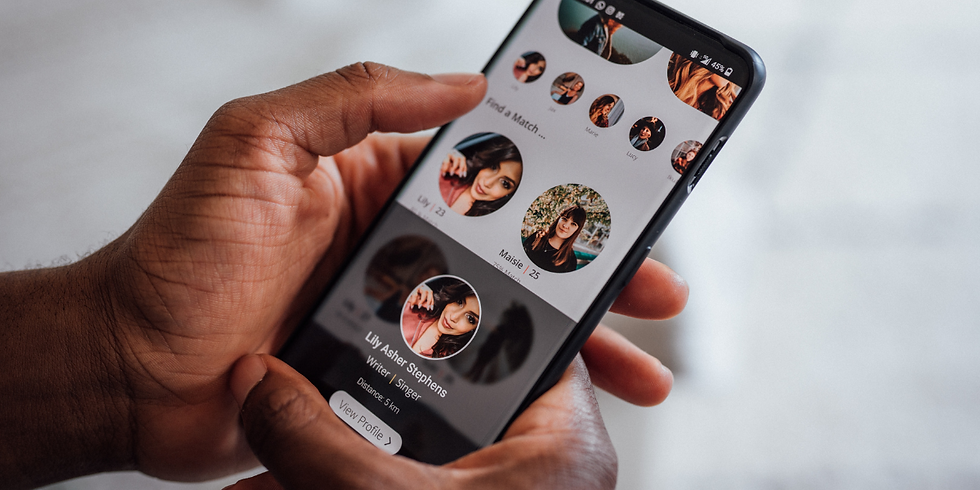
In an intriguing turn of events in the world of dating apps, Wisani Shilumani, co-founder of the South African dating app Boardroom, recently took to X (formerly Twitter) to voice a suspicion that has set the tech world abuzz. Shilumani’s post cryptically hinted at potential intellectual property (IP) infringement, accompanied by a screenshot of a Hinge VP’s announcement of a new feature. The post read: "Wonder where they got the idea (after one of their PMs joined our app 💀)."

Shots fired, as often said: Shilumani believes that Hinge may have adopted a feature from Boardroom, potentially after an employee of Hinge had joined Boardroom [After the publishing of this article, Shilumani clarified that the employee was a PM from Match Group (who own Hinge/Tinder/OkCupid etc). This raises important questions about IP rights, especially in the fast-moving and often collaborative world of tech startups. Let's delve into the potential IP implications, explore how Boardroom's Terms of Service could protect them, consider Hinge's potential vicarious liability, and examine how entrepreneurs can safeguard their innovations.
Boardroom’s Terms of Service: A Shield Against Infringement
Boardroom’s Terms of Service include specific clauses designed to protect their intellectual property and business interests. Notably, the Terms of Service state:
“Certain Restrictions. The rights approved to you in these Terms are subject to the following restrictions: (a) you shall not sell, rent, lease, transfer, assign, distribute, host, or otherwise commercially exploit the Website or the Mobile App; (b) you shall not change, make derivative works of, disassemble, reverse compile or reverse engineer any part of the Website or the Mobile App; (c) you shall not access the Website or the Mobile App in order to build a similar or competitive app/website; and (d) except as expressly stated herein, no part of the Website or the Mobile App may be copied, reproduced, distributed, republished, downloaded, displayed, posted or transmitted in any form or by any means unless otherwise indicated, any future release, update, or other addition to functionality of the Website or the Mobile App shall be subject to these Terms. All copyright and other proprietary notices on the Website or the Mobile App must be retained on all copies thereof.”
These terms serve as a legal framework to protect Boardroom’s intellectual property. Specifically:
1. Prohibition of Commercial Exploitation: Users are explicitly forbidden from commercially exploiting the app, which would include using proprietary features for competitive advantage.
2. No Reverse Engineering: Users are barred from reverse engineering the app, a crucial safeguard against copying proprietary features.
3. No Building Competitive Apps: Importantly, users agree not to use the app to build a similar or competitive app. This clause directly addresses concerns about feature copying.
Potential Legal Action Against Hinge
If Boardroom decides to pursue legal action against Hinge, their Terms of Service provide a strong foundation. However, they would need to prove several key points:
1. Access and Agreement: That the Hinge PM had access to Boardroom’s app and agreed to the Terms of Service, thereby binding them to the restrictions outlined.
2. Violation of Terms: That Hinge’s new feature is substantially similar to Boardroom’s and that this similarity resulted from actions violating the Terms of Service, such as reverse engineering or using the app to build a competitive product.
Vicarious Liability of Hinge
An important aspect to consider is whether Hinge can be held vicariously liable for the actions of the PM who allegedly copied Boardroom’s feature. Vicarious liability holds an employer responsible for the actions of an employee if those actions occur within the course and scope of employment.
For Hinge to be held vicariously liable, Boardroom would need to demonstrate that:
1. Employment Scope: The PM was acting within the normal course and scope of their employment when they accessed and potentially misused Boardroom’s proprietary features. This includes whether the PM’s actions were part of their job duties or if they were acting independently.
2. Benefit to Employer: The actions taken by the PM were intended to benefit Hinge. If the PM used knowledge or information obtained from Boardroom to improve Hinge’s app, this could be seen as benefiting Hinge.
If these elements are proven, Hinge could be held accountable for the alleged IP infringement.
Jurisdictional Challenges
This case is complicated by the international nature of the parties involved—Boardroom is based in South Africa, while Hinge operates out of the United States. Determining which country’s courts have jurisdiction will depend on several factors:
- Location of the Infringement: If the infringement occurred primarily in South Africa (e.g., the Hinge PM accessed Boardroom’s app while in South Africa), South African courts might have jurisdiction. This is not conclusive as we must also consider what the Terms of Service have to explicitly state about jurisdiction.
- Terms of Service Jurisdiction Clause: Boardroom’s Terms of Service specify that disputes are to be resolved in South African courts under South African law… Yaaay!!!!
- Cross-Border Enforcement: Even if a South African court rules in favour of Boardroom, enforcing the judgment in the United States could be challenging and would require navigating international legal processes. Doable, but could prove costly.
Protecting Innovations in a Global Tech Landscape
Given these complexities, how can startups like Boardroom protect their interests?
1. Non-Disclosure Agreements (NDAs): Before sharing any proprietary information with potential employees or partners, ensure they sign NDAs. This can help protect trade secrets and provide legal recourse if the information is misused.
2. Employee Contracts: Include clauses in employment contracts that clearly state the ownership of innovations and any post-employment restrictions regarding the use of proprietary information.
3. Proactive IP Strategies: While patents might not always be feasible, companies should still explore patenting critical innovations. Copyrights and trademarks are easier to obtain and can provide some level of protection.
4. Documentation and Monitoring: Keep thorough documentation of the development process and any IP-related activities. Monitor competitors for potential infringements and be prepared to take legal action if necessary.
5. International IP Protections: Consider filing for IP protections in key international markets, despite the associated costs. Understanding international treaties like the Patent Cooperation Treaty (PCT) and the Madrid Protocol for trademarks can be advantageous.
Final Thoughts
Shilumani’s post raises pertinent questions about innovation, IP rights, and the ethics of competition in the tech world. Did Hinge indeed borrow a feature from Boardroom, and if so, what can be done about it? While the answer might not be straightforward, this scenario highlights the importance of robust IP strategies and the need for vigilance in protecting one’s creations. Beyond this, innovation, speed and agility are possibly the key ingredients for entrepreneurs to navigate around the competitive landscape they encounter successfully.
For entrepreneurs navigating similar waters, the key takeaway is to be proactive in safeguarding their innovations. In a landscape where ideas travel quickly and boundaries are often blurred, the protection of intellectual property is not just a legal necessity but a strategic imperative. How prepared are you to defend your next big idea?
The StartUp Legal is a legal consultancy geared to provide SMEs quality legal services. Book a complimentary online consultation with us using the following link: https://calendar.app.google/p23Cu6ZdKCm4M8Mn6


Comments